


Dune spinach (Tetragonia decumbens): the gateway to endemic food
- Apr 7, 2020
- 6 min read

Out of all the endemic edible plants in the Cape Floristic Region that I want to write about, Dune spinach is a very appropriate starting point. It highlights the cultural heritage associated with every edible indigenous plant, the sustainability (and legal aspects) of foraging it from the wild and finally responsible ways to interact with the plant and incorporate it in your diet. I will try and address these three main topics in this post and finally link to all future recipes that use Dune spinach if you ever want to try them.
Before we delve into the delicious recipes you can try with Dune spinach let's first explore the ecology and distribution of the plant.
Ecology and Distribution
Dune spinach grows along the coastline from southern Namibia to Kwa-Zulu Natal in Dune Cordon vegetation (the band along the coast that is usually dune sand exposed to sea mist).

This is an extremely tough environment for plants to survive in. Dune sand holds no water and bakes to a crisp during the day. Constant exposure to sea mist means the entire environment (and soil) is drenched in salt, not to mention the harsh winds that are common along the coast. Dune spinach has evolved special adaptations to cope with this harsh environment and fill the niche that not many plants can survive in. Dune spinach can colonise (be the first plants to grow) on dunes, and give other plants a more tolerable environment to establish in: they really can construct a whole ecosystem. This is why the plant is often used to stabilise dunes as they spread quickly over any sandy/salty sand and can hold a mountain of sand in place with their enormous, spreading root systems.
So how does Dune spinach survive in this harsh environment?

The plant is a succulent, storing water in special cells that cover every surface of the thick leaves (water cells). During dry spells the leaves can go into a “dormant” phase and switch to a different mode of photosynthesis, resulting in beautiful red colours.
Additionally, the plant has a wide spreading shallow root system (this is why it is so good at holding dunes in place) paired with a very thick, large tap route that also stores water for when there are times of drought. The plant is a halophyte (salt plant) which means it can tolerate high salinity levels in the soil, and more importantly in sea mist: the plant can survive very well on sea mist that rolls over them. This all results in a plant that is supremely well suited to this harsh environment.
Dune spinach and humans
Due to the fact that Dune spinach occurs along the coast, it is in close proximity to another reliable food source: the inter tidal zone. In every area where it occurs, where there is a tradition of foraging for seafood, there is a tradition of harvesting dune spinach. It transcends cultural boundaries and is harvested wherever it grows.
Humans have been living in the Cape Floristic Region since our species’ evolution 250 000 years ago. This means that our ancestors evolved eating the plants in this region and Dune spinach was very likely one of them. In my research I am particularly interested in the plant foods that are available along the coast, as it is evident from archaeological evidence that spans the past 250 000 years, that our ancestors spent a lot of time in these environments exploiting the resources available in the intertidal zone. Shellfish is a great, reliable, source of food, but lacks many of the vitamins and minerals we need to be healthy. Those nutrients would have been supplemented from plant sources, such as dune spinach. Dune spinach is high in iron and calcium, both of which would have been critical nutrient supplements in a predominantly shellfish diet. The juxtaposition of abundant shellfish resources and abundant plant resources in coastal region has been argued to have kept a small group of humans alive in the region when it seems humans had all but died out almost everywhere else in Africa. Let that sink in.
Interacting with Dune spinach responsibly
Today you will find Dune spinach at almost every single beach, in thick, green carpets over the dunes. This abundance, however, is not an invitation to harvest as much as you want as frequently as you want. This is illegal and more importantly, unsustainable. The argument can (and has) been made that a species such as Dune spinach that grows so prolifically can be harvested as much as your heart desires. This rational is a slippery slope and relies on every individuals judgement of the threat of over-harvesting. It is always best practice to grow wild plants you want to eat yourself and where not possible to be very aware of where the plants (and animals) come from that we buy.
A year ago, I had to downscale from a 1000 square meter garden to a 48 square meter garden. I am super privileged to have this tiny garden, but I have had to make hard choices of which plants to grow in it to achieve my goal of growing the indigenous plants I want to eat. Dune spinach was a no brainer on this list.
So, how can you get your hands-on Dune spinach? I started growing Dune spinach years ago from a cutting. A cutting is a piece of plant material that you basically stick in the ground and the tip in the ground grows roots. Plant magic. Years later I grew Dune spinach from seeds for the first time, with great success. Growing plants from seed is always the most sustainable thing to do: take only a few seeds and allow the majority to stay behind and become baby plants.
So how do you find some seeds? The scientific name for the genus Dune spinach belongs to (Tetragonia) is derived from the shape of the seeds! The seeds are super distinctive and have four (tetra) wings. Look out for the seeds in summer following the flowers in spring. The seeds are evolved to disperse away from their parent by tumbling along the beach using the cool winged design to catch the wind. If you take a couple and plant them (just two centimetres under the surface), keep them in damp sand they should germinate, no problem. Once they have germinated you can basically forget about them. I grow mine in a raised bed dedicated to endemic plants that I never water. Natural rainwater should be enough to feed this hardy plant.

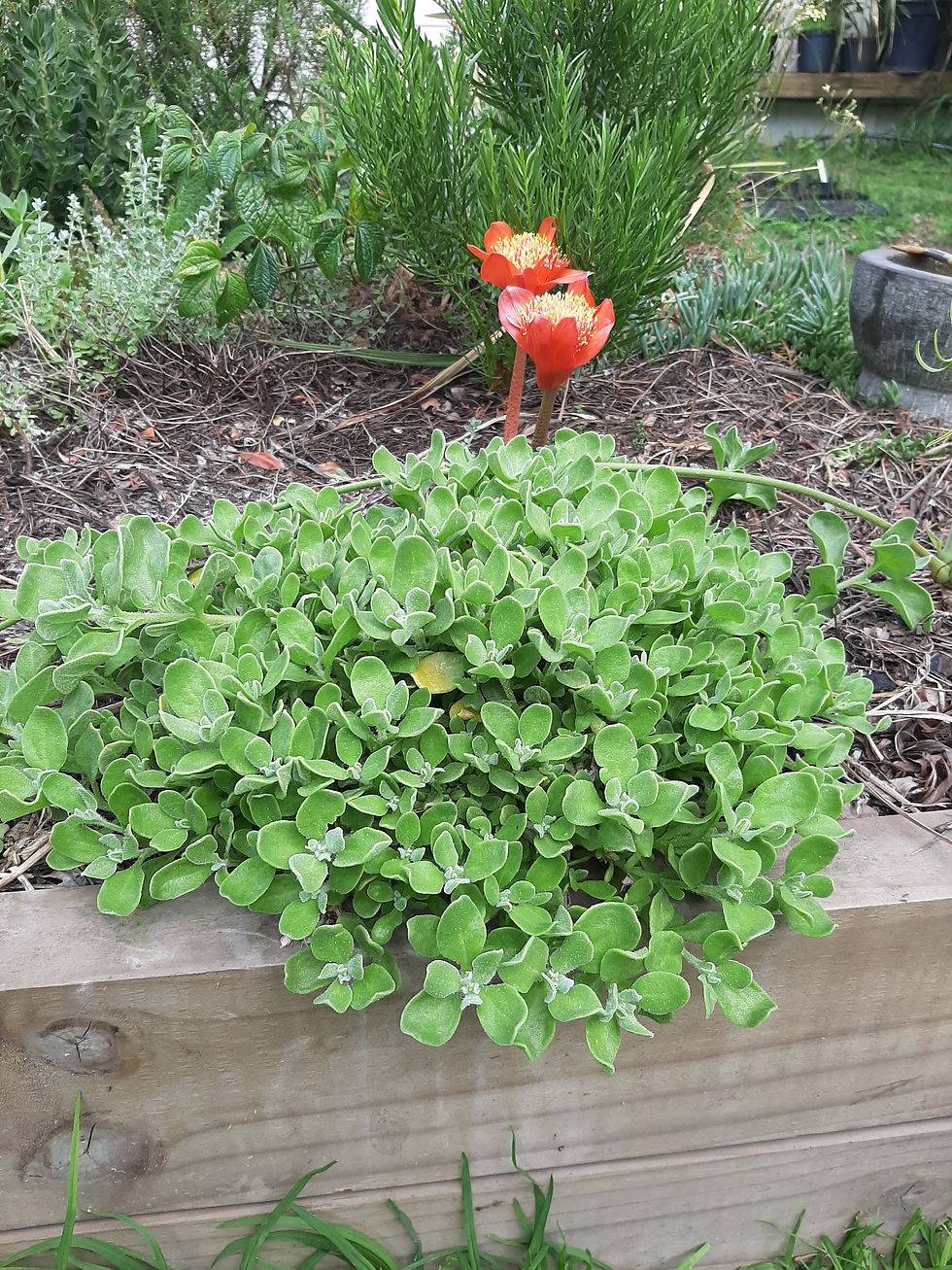
They create a very attractive shape and contrast with my other lowland Fynbos endemic plants in shades of grey and emerald.
I have to harvest it constantly as it has a tendency to completely take over! I often leave it too long and must cut back masses and masses.


This is no problem as you can process Dune spinach, cook it and freeze it if you don’t have the energy or inspiration to cook with it immediately.
When you harvest the Dune spinach you will notice it consists of long runners. You need to pick the leaves of these runners as the stems are tough and fibrous. What I do is, I grab the tip of the runner with my right hand, and strip the leaves off by running my other hand down the stem (like you would clean an ear of corn). I wash the leaves thoroughly (as they love to pick up sand) and place them in a pot and boil (with no additional water) until the leaves are wilted.

You can use the spinach immediately in any recipe or place them in Ziplock bags to freeze. I will be posting all the recipes I have made in the past using dune spinach and link them here. For now I have posted my Dune spinach falafel recipe.
I derive immense joy from knowing that I have a reliable, healthy food stuff in the garden that is happy to grow there, despite being completely wild! I believe Dune spinach is the gateway plant to immersing once self in the cultural, environmental and nutritional aspects of indigenous edible plants (no matter where in the world you are). In a society where iron and calcium are both deficient in most low income households, dune spinach really does have potential to improve the food security of many people.


Comments